
Maximize with Google Business Insights Analytics
A typical business sees roughly 59 actions from its Google Business Profile. This makes GBP a major source of quantifiable customer activity. Google Business Insights analytics can really help increase online visibility and marketing performance.
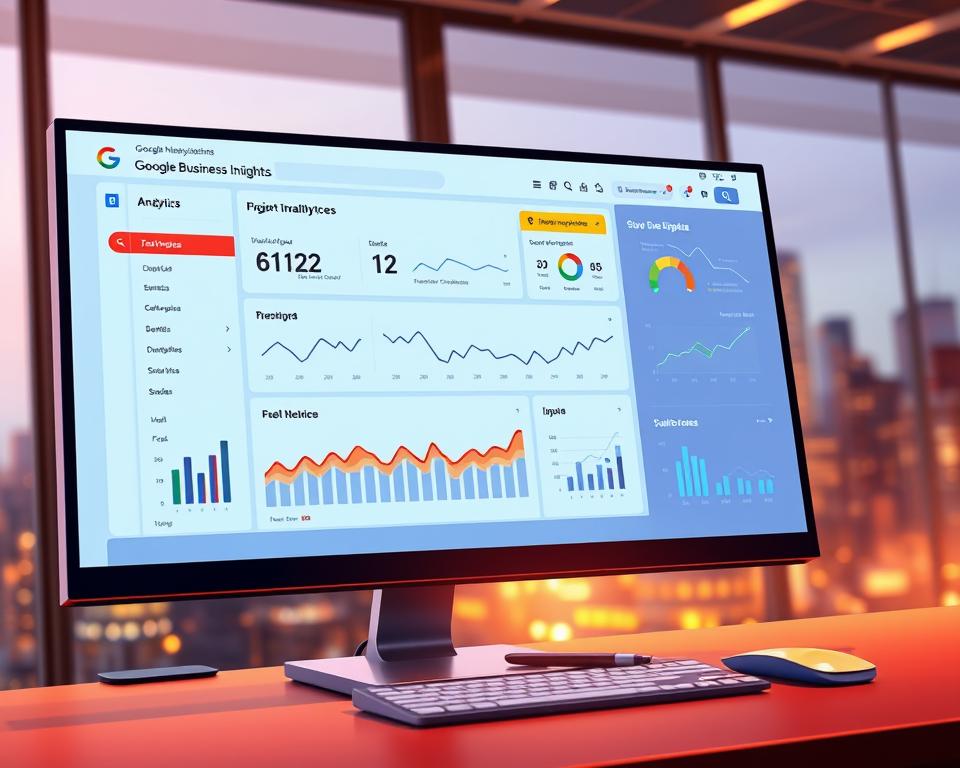
Google Business Insights analytics shows how users reach and engage with your listing. It tracks Total Impressions, Website Clicks, Calls, Directions, Messages, Bookings, Menu Clicks, Orders, Reviews, and Average Rating. They also clarify Search vs. Maps origin, device usage, and actions signaling purchase intent.
For U.S. businesses focused on local SEO, these insights are crucial. They inform smarter how to log In to Google Business profile decisions that improve rankings and draw more customers. Marketing1on1 uses GBP data to raise marketing performance. By integrating GBP insights with Google Analytics, they provide a clear view of traffic and engagement.
Understanding Google Business Insights Analytics for Local SEO
It converts raw profile activity into actionable signals. It tracks Impressions for Search and Maps, Website Clicks, Calls, Directions, Messages, Bookings, Menu Clicks, Orders, Reviews, and Average Rating. Each metric is logged separately so teams can spot patterns and gaps in online visibility.
Understanding those metrics supports local SEO by showing how customers find you and what they do after they see your listing. Discovery vs. direct splits expose keyword relevance and intent. Rising clicks/calls/bookings signal usefulness to Google and can improve local rankings.
Below is a compact reference to help translate GBP metrics into action. Use Total Impressions plus action counts to flag underperforming areas. Monitor Reviews and Average Rating to steer reputation. Correlate these trends with broader SEO optimization efforts for measurable gains.
| Metric | Meaning | Action to Take |
|---|---|---|
| Impressions (Search & Maps) | Surface + frequency of appearances | Adjust local keywords and update categories to increase online visibility |
| Site Visits | Deeper intent to engage | Optimize landing pages and CTAs to raise conversion rates |
| Direct Contacts | Immediate demand signals | Enhance response; implement UTM call tracking |
| Directions | Catchment areas and peaks | Align promos/hours to heat maps |
| Bookings, Orders, Menu Clicks | Service or product demand signals | Feature popular items; simplify booking |
| Reviews & Average Rating | Perceived quality & feedback | Ask/respond to reviews to improve local signals |
Marketing1on1 focuses on GBP Insights because it ties profile behavior to SEO outcomes. They use these signals to steer SEO, refine content, and improve UX on Profile and site. That alignment helps clients capture more organic traffic and higher search engine ranking over time.
Practical use of insights is straightforward. Monitor Total Impressions and actions to find where visibility is wasted. Use discovery vs. direct splits to refine keywords. Blend reputation + action trends to prioritize fixes that increase trust and local presence.
How Customers Search for Your Business
Customers look for businesses in two main ways. They might search directly for a brand name or address. Or, they might search for a product or service without knowing the brand. GBP Insights clarify these behaviors and inform local strategy.
Difference between discovery searches and direct searches
Direct searches are brand/address lookups. These searches show they know and trust your brand. Discovery searches, on the other hand, happen when people search for a product or service (e.g., “coffee shop near me”). They reflect demand and category intent.
Using Total Searches and search keywords to refine targeting
Total Searches and keyword lists reveal which queries drive visibility. Look at these keywords to see if your website, GBP posts, and blog topics match what customers are searching for. Aligning content to top discovery terms makes your business more relevant to local customers.
Aligning GBP Content with What Customers Search
- Audit posts/services to add high-volume discovery terms.
- Revise description/Q&A to cover common keywords and questions.
- Publish blogs/FAQs targeting frequent discovery queries + local modifiers.
- Monitor Total Searches trends with routine data analysis to shift focus as demand changes.
- Use the Google Business Profile Performance tab and connectors to consolidate keyword insights across locations.
Impressions and Platform Breakdown: Search vs. Maps
Local businesses need to know where profile views originate. It breaks out Search vs. Maps Impressions. This informs focus areas for marketing and UX.
Impressions Search = Google Search views. Impressions Maps = Google Maps views. A rise in Maps impressions often means people are looking for immediate local services.
More Maps impressions mean more on-the-go queries and directions requests. More Search impressions mean people are researching before visiting or booking. Tailor content and CTAs to match the intent.
Mobile vs. Desktop Impressions & Optimization Signals
Google Business Insights analytics breaks down device use for both Search and Maps impressions. High mobile share signals urgent local intent. This calls for mobile optimization, like fast-loading pages and clear hours.
Desktop-heavy shares suggest deeper research. Focus on richer content, detailed descriptions, and review summaries. That builds trust pre-conversion.
Using platform data to prioritize marketing and UX improvements
Platform splits guide where to invest time. When Maps is high, improve location pages and mobile CTAs. This increases local visibility.
If Search dominates, refine meta descriptions and GBP posts. Marketing1on1 uses these signals to suggest targeted UX and content changes. Such changes improve conversions and local performance.
| KPI | Primary Signal | Recommended Action |
|---|---|---|
| Maps Impressions | Map-intent, often mobile | Confirm NAP/hours; add directions + tap-to-call |
| Search Impressions | Research-driven, often desktop | Improve meta descriptions, GBP posts, and service details |
| Mobile-Heavy | Urgent, nearby demand | Prioritize speed and mobile UX |
| Desktop-Heavy | Deeper evaluation behavior | Add depth; feature review highlights |
Understanding Website Clicks from Your GBP
GBP website clicks reveal user intent. Spikes indicate interest in menus, pricing, or booking. Drops can signal listing relevance or mobile UX issues.
Tracking these clicks with website traffic metrics helps you catch these changes fast.
Reading Clicks for Intent
Clicks differentiate browsing from buying intent. High clicks, low sales suggest weak landing pages. Low clicks with strong impressions indicate CTA/listing gaps.
Use this info to make your content match what users want.
Connecting Clicks to GA Insights
Connect Google Business Insights with Google Analytics, like GA4, to see the whole journey. Review referrals, bounce, and engagement time. Also, check conversion events for GBP referrals.
Tag GBP links with UTM parameters in Google Analytics. You’ll attribute visits to specific campaigns, pages, and terms.
Tactics to Lift GBP CTR
Clarify business descriptions and add direct CTAs to raise clicks. Use recent photos that match your landing page. Make sure your landing pages work well on mobile and load quickly.
A/B test headlines and CTAs with short experiments. Review outcomes in GA.
| KPI | Insight | Action |
|---|---|---|
| GBP Website Clicks | Indicates local interest/intent | Improve copy/CTAs; tune post timing |
| Referral Sessions (Google Analytics) | Shows post-click performance | Tighten relevance; track conversions |
| Bounce & Engagement | Indicates content fit and user experience | Adjust content, speed, and mobile layout |
| UTM Clicks | Connects clicks to posts/offers | Test and refine campaigns |
| GA4 Conversions | Measures actual outcomes from GBP traffic | Prioritize high-conversion pages/spend |
Combine GBP Insights with GA and engagement analysis. This shows which pages work best. Use this info to refine SEO, paid ads, and content updates.
Small, focused tests on CTAs and landing pages can lead to big gains in clicks and sales.
Tracking Calls, Messages, and Phone Call Data
Google Business Insights analytics shows how customers contact your business. It helps spot busy days and adjust staffing. It also lets you test when to post for better results.
Calls by Day/Season
Insights reveal calls by day and hour. Schedule staffing around peaks. It also shows when to offer special deals based on demand.
Attributing Calls Accurately
Implement call tracking and UTM-tagged numbers. This tracks where calls come from and ties them to analytics. UTM numbers reveal ad/post call drivers.
Using message and call trends to enhance customer service and postings
Track message volume and common questions to refine your Q&A and posts. If calls or messages fall, check your CTAs and profile content. Train staff and create targeted posts from these trends.
| KPI | Meaning | Action to take |
|---|---|---|
| Calls by day/hour | Peak contact times and staffing needs | Adjust schedules; post pre-peak |
| Seasonality | Event/holiday-driven shifts | Plan promos; adjust hours |
| Call tracking with UTM-tagged numbers | Precise phone source attribution | Assign per-campaign numbers; log conversions |
| GBP Messages | Direct inquiries and common customer needs | Update Q&A, refine service pages, train staff |
| Falling Calls/Messages | Possible profile issues or weak CTAs | Audit content; test CTAs; verify routing |
Marketing1on1 recommends call tracking + UTM numbers + GBP Insights. This ties phone leads to conversions. Marketers can see which tactics perform.
Directions & Heat Maps: Geo-Targeting for Performance
Local businesses benefit significantly from GBP Insights. They learn where customers originate. This info helps them plan better for staff, promotions, and ads.
How to Read the Directions Heat Map
The heat map highlights visitor origins. It surfaces travel patterns. By looking at origin zip codes, you can see which areas are most visited.
Compare these areas with in-store sales/appointments. Confirm directions-to-visit relationships. It helps improve local marketing efforts.
Location Data → Better Geo Targeting
Target ads using origin ZIPs and density. Focus on areas with more visitors to get better returns. Make ads specific to each neighborhood for better results.
Geo-targeting works best with location-specific ads. Mention local landmarks or names in headlines. This boosts clicks. Spend more on ZIP codes with lots of direction requests for the best results.
How direction requests inform peak times and in-person demand
Track direction requests by day and hour to find busy times. Match staff schedules and promotions with these times. This boosts service and sales.
Marketing1on1 uses this data to better plan ads and offers. They aim to turn online interest into real visits. This approach helps businesses grow.
Conversion Analysis with Action Metrics
GBP action metrics reveal customer demand. Bookings, Menu Clicks, and Orders track their journey from discovery to purchase. Use them for quick fixes and longer-term service/menu improvements.
Measuring Demand with Actions
Watch Bookings and Menu Clicks to find busy times and popular items. If a menu item gets lots of clicks but few orders, look into why. Try simple tests on descriptions, photos, and prices to see what improves sales.
Smoother Booking and Ordering
Make booking and online ordering easy in your profile. Make sure booking shows real-time availability and sends quick confirmations. Link to pages that are ready to buy.
Use action metrics to prioritize product and service updates
Use conversion analysis to see which services are most popular. If a service gets lots of interest but few sales, check how it’s delivered and staffed. Adjust offers or add promos to convert interest.
Roll-Up Reporting Across Locations
Compare action metrics by location to find what works best. Google Business Insights analytics can show top performers. Use these insights to make successful elements common across all locations.
Reviews, Ratings, and Engagement Analysis
Reviews/ratings in GBP Insights reflect sentiment. They build trust with customers and Google. Monitor trends to track reputation shifts.
It’s also important to compare yourself to others. Check how many reviews and ratings you have compared to your competitors. This can help you see where you need to adjust and what to prioritize.
Review content provides valuable insights. Look for common praises and complaints. Use insights to increase customer satisfaction.
Responses to reviews are critical. Answer negative reviews quickly and calmly, showing you’re working to fix the problem. Say thank you to positive reviewers and ask for more details. This can help build trust and improve your visibility online.
Here’s a simple table to compare reputation metrics for three different locations. Adopt this format to guide data-driven decisions using GBP Insights.
| Site | Reviews (30 days) | Avg. Rating | Themes | User Engagement Analysis Notes |
|---|---|---|---|---|
| Clinic – Downtown | 48 | ≈4.6 | short wait, friendly staff, clear billing | High response rate; improving conversions from clicks |
| Restaurant – Northside | 72 | 4.2 | quality food, service speed, parking | Moderate engagement; speed up replies, add targeted offers |
| West End Salon | 35 | ≈4.8 | stylists, easy booking, atmosphere | Strong rating; leverage reviews in promos |
Regularly export reviews/ratings into reports. Apply insights to training, offers, and content. This way, you can see how your reputation metrics lead to better search results and customer loyalty.
Turn GBP Insights into Digital Strategy
Google Business Insights analytics offers clear local insights for a solid digital marketing plan. Begin with a simple plan that links profile actions to your business goals. Use these metrics to guide your content, paid ads, and local SEO efforts.
Link GBP insights with Google Analytics to track user actions after visiting your profile. Check engagement, conversions, and session quality in GA4. This helps you identify and improve pages with high clicks but low engagement.
Use GBP insights and Google Analytics to choose the right content and blog topics. Local search data points to important keywords for SEO. Mirror topics in GBP posts for better visibility.
Apply impressions and action metrics to decide which pages to promote in paid campaigns. Add campaign UTMs to compare paid traffic to organic clicks. This enhances attribution and shows your marketing’s true performance.
Use directions and origin ZIPs to shape geo. Focus spend on high-origin areas. This lowers CPA and improves ROAS.
Call and booking trends show peak contact times. Run promos and staff chat during peaks to improve conversions. Use UTM phone numbers and call tracking for accuracy.
Below is a compact comparison of typical actions and suggested uses for immediate testing.
| GBP Metric | Reason | Test Now |
|---|---|---|
| Search/Maps Impressions | Surface-specific visibility | Boost content for queries with rising impressions |
| Clicks | Indicates intent to explore services or buy | Inspect landing pages in GA4 and optimize CTAs |
| Directions/ZIPs | Reveals true catchment area for foot traffic | Reallocate local ad spend to top zip codes |
| Calls and Messages | Shows immediacy of demand | Align staffing and time-limited offers to peaks |
| Booking and Orders | Direct measure of conversions from profile | Run promos; measure UTM lift |
When teams use Google Business Insights analytics with Google Analytics integration, they make better decisions. These decisions lead to better conversion rates and marketing performance.
Start small, measure, scale winners. This disciplined approach turns local insights into repeatable wins for SEO and digital marketing strategy.
Advanced Reporting with Dashboards & Multi-Location Views
Centralized reporting clarifies what works. Combine GBP Insights with GA4 Explore. They combine data like impressions, clicks, and bookings with website traffic.
A single source of truth surfaces trends fast. They can then make improvements across locations.
Build Actionable Dashboards
Create dashboards in Looker Studio or GA4. Highlight only critical metrics. Join GBP metrics with sessions, conversions, events.
This way, you can compare actions per listing and conversion rates side by side.
Design widgets for week-over-week clicks/calls/bookings. Keep layouts simple. Teams consume focused dashboards faster and act on insights sooner.
Scaling with Multi-Location Connectors
For brands with many sites, free connectors to Looker Studio are available. Aggregate GBP Insights across locations. Use connectors to track organic growth, local search ranking shifts, and cross-location trends without rebuilding reports for each store.
Standardize UTMs and phone tracking before scaling. Consistency yields clean data. This simplifies roll-up reports and improves data analysis accuracy.
How Marketing1on1 leverages dashboards to measure ROI and cross-location trends
Marketing1on1 creates dashboards that compare actions per listing and booking trends. These reveal top tactics. Teams map review volume and average rating to conversions to prioritize investments that move the needle.
Automate routine reports to free analysts. With event tracking in GA4 and uniform phone attribution, Marketing1on1 measures ROI consistently across regions. They surface repeatable playbooks for local teams.
Practical GBP Optimization Tips & Best Practices
Start with a simple plan linking GBP activity to goals. Focus on being clear, having accurate contact info, and keeping content consistent. Even small updates to posts, photos, and Q&A sections can increase visibility and trust.
Set up key events and conversion tracking:
- Configure GA4 events: forms, phone clicks, bookings, orders.
- Mark high-value interactions as conversions.
- Use event names that match campaign labels to simplify attribution and reduce confusion.
Use campaign tracking (UTMs) to unify performance data:
- Append UTMs to profile website links and to links in posts for clear source and medium data.
- Pair UTMs with tracked numbers to capture offline conversions.
- Adopt consistent naming conventions to group campaigns and compare results across channels.
Audit: Accuracy, Posts, Q&A, Photos, CTAs
- Verify NAP, hours, services, primary categories monthly.
- Publish timely posts and refresh photos for seasonality.
- Update Q&A with common questions/answers.
- Match CTAs to relevant landing pages to cut bounce.
- Monitor Reviews and respond promptly to increase reputation and local relevance.
Watch for drops in impressions, clicks, or bookings. Use combined GBP+GA dashboards to spot issues quickly.
For multi-location brands, use dashboard connectors and templates for scheduled audits. Marketing1on1 suggests monthly reports to catch problems early and keep GBP optimization in line with SEO goals.
| Action | Reason | Track |
|---|---|---|
| GA4 Phone Conversions | Attributes calls to profile activity for real ROI | Call conversions, duration |
| Add UTMs to profile links | Unifies cross-channel data | UTM-tagged sessions, source/medium breakdown |
| Monthly NAP and hours audit | Keeps listing accurate and reduces customer friction | Profile completeness score, search impressions |
| Refresh photos and posts | Improves engagement/relevance | Photo views; post interactions |
| Use dashboards for multi-location reports | Scales insights; speeds decisions | Impressions, clicks, bookings by location |
Wrapping Up
GBP Insights are essential for local data. It helps track online visibility and user engagement. By monitoring impressions, website clicks, and more, businesses can improve their SEO and digital marketing.
Pair GBP Insights with GA4 and call tracking. That creates a solid measurement approach. Custom dashboards and reports help turn data into actionable decisions, increasing marketing and conversions.
In the U.S., these strategies improve engagement and presence. Marketing1on1 focuses on targeted optimizations and reporting. This demonstrates how GBP Insights can fuel campaigns and growth.